Customs in Kebbi deepens collaboration with federal fire service, as Comptroller Matawalle supplies fire extinguishers to Command
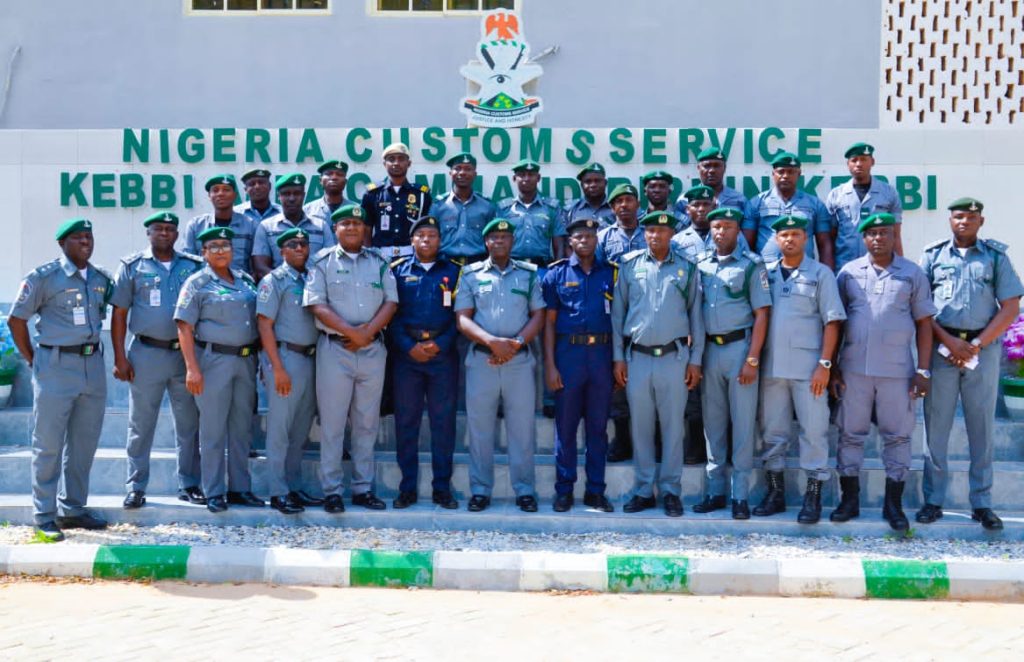
Customs in Kebbi deepens collaboration with federal fire service, as Comptroller Matawalle supplies fire extinguishers to Command
The Kebbi Area Command of the Nigeria Customs Service has reinforced its commitment to operational excellence and personnel development through strategic collaboration with the Federal Fire Service, culminating in comprehensive fire-fighting and fire-extinguishing drill for officers and men of the Command.

The capacity building programme, held on Thursday, 20 August 2026, at the Command Headquarters, Birnin Kebbi, was designed to equip personnel with the requisite knowledge and practical skills to prevent fire outbreaks and effectively contain emergencies at their incipient stages.
The laudable initiative shows foresight and administrative ingenuity of the Customs Area Controller, Comptroller Mahmoud Matawalle Ibrahim, fdc, whose leadership style places a premium not only on enforcement and revenue generation, but also on the safety, preparedness and professional competence of officers under his Command.
Representing the Area Controller at the programme, Deputy Comptroller Ibrahim Yusuf emphasised that fire safety is a collective responsibility, stressing that emergencies can occur without warning and that the possession of appropriate knowledge and skills could determine whether an incident remains manageable or escalates into a devastating disaster.
The initiative also demonstrates Comptroller Ibrahim’s proactive approach to leadership. Rather than waiting for an emergency before taking preventive measures, he has shown strategic foresight to anticipate operational risks and equip his personnel with the competencies required to respond decisively when confronted with unforeseen challenges.
Facilitating the training, Deputy Superintendent of Fire Service, Kabiru Muhammad, alongside his co-facilitators, commended Comptroller Matawalle Ibrahim for providing the necessary fire-safety equipment and creating the enabling environment for the training.
He described fire safety as a shared responsibility involving building owners, managers, employees, occupants and fire-safety professionals.
Muhammad urged officers and men to translate the knowledge acquired into practical readiness, noting that the skills imparted during the exercise could prove invaluable in circumstances where prompt and appropriate intervention could mean the difference between the preservation and loss of lives and property.
The training covered the fundamental principles of fire extinction, common causes of fire, preventive measures and appropriate application of fire extinguishers, fire blankets and fire buckets.
The theoretical sessions were complemented by practical demonstrations, allowing officers and men to gain hands-on experience in deploying firefighting equipment under the expert supervision of fire-safety professionals.
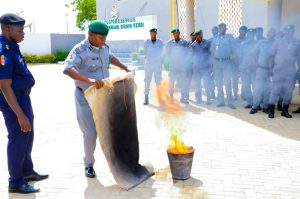
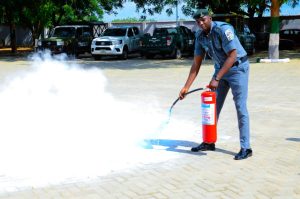
The practical dimension of the exercise further reflected the Controller’s appreciation that institutional efficiency is inseparable from continuous capacity development. By exposing personnel to real life emergency response techniques, Comptroller Matawalle Ibrahim has demonstrated that effective leadership goes beyond issuing directives; it entails deliberately building a workforce that is competent, confident and adequately prepared to confront emerging operational exigencies.
His intervention in providing the requisite firefighting equipment equally speaks to a leadership disposition anchored on preparedness rather than reaction. Such strategic investment in personnel and infrastructure strengthens the Command’s resilience, enhances workplace safety and ultimately creates an environment in which officers can discharge their statutory responsibilities with greater efficiency and confidence.
The initiative also exemplifies Comptroller Matawalle Ibrahim’s ability to harness inter-agency collaboration for institutional advancement. By deepening the Command’s partnership with the Federal Fire Service, he has expanded the frontiers of professional knowledge available to his personnel while fostering the kind of operational synergy required for effective emergency management.
In his closing remarks, the facilitators encouraged participants to disseminate the knowledge acquired beyond the workplace to their families and communities. This, they stressed, would broaden the impact of the initiative and promote a culture of fire awareness and preparedness across society.