Customs intensifies anti-smuggling drive to shield local industries, seizes 56 containers of contraband
Customs intensifies anti-smuggling drive to shield local industries,
seizes 56 containers of contraband

The Nigeria Customs Service, NCS, has intensified its intelligence-led enforcement campaign to shield Nigerian farmers, manufacturers, legitimate businesses and other domestic producers from the debilitating effects of smuggling, false declarations and the unlawful importation of prohibited goods capable of undermining local production and employment.
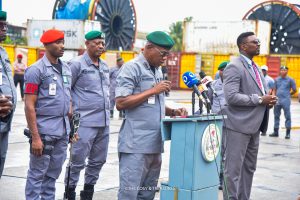
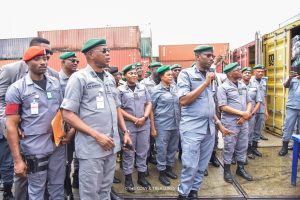
The Comptroller General of Customs, CGC Bashir Adewale Adeniyi, MFR, PhD, disclosed this on Tuesday, 15 September 2026, while briefing newsmen in Port Harcourt II Area Command, Onne, Rivers State, on interception of 56 containers of prohibited goods with a total duty paid value of N5.53 billion.
The seizures, according to the CGC, underscore the Service’s resolve to prevent the Nigerian market from being inundated with illicit and improperly declared imports that threaten the competitiveness and sustainability of legitimate domestic enterprises.
The Customs Chief explained that the intervention was the product of intelligence-driven, risk-based and strategically targeted enforcement operations, designed to identify and intercept consignments that violate Nigeria’s import regulations.
Rather than adopting a blanket approach to cargo examination, the Service, under his leadership, has continued to refine its risk-management architecture to facilitate legitimate trade while subjecting suspicious and high-risk consignments to enhanced scrutiny.
The CGC noted that unchecked inflows of products that could be produced or processed locally impose considerable pressure on Nigerian farmers, manufacturers and other players within domestic value chains. Such illicit trade, he explained, can distort market competition, weaken demand for locally manufactured products, discourage investment and ultimately erode the economic gains associated with industrialisation and job creation.
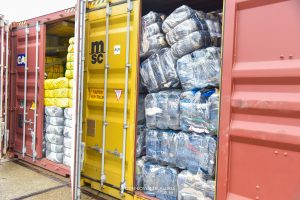

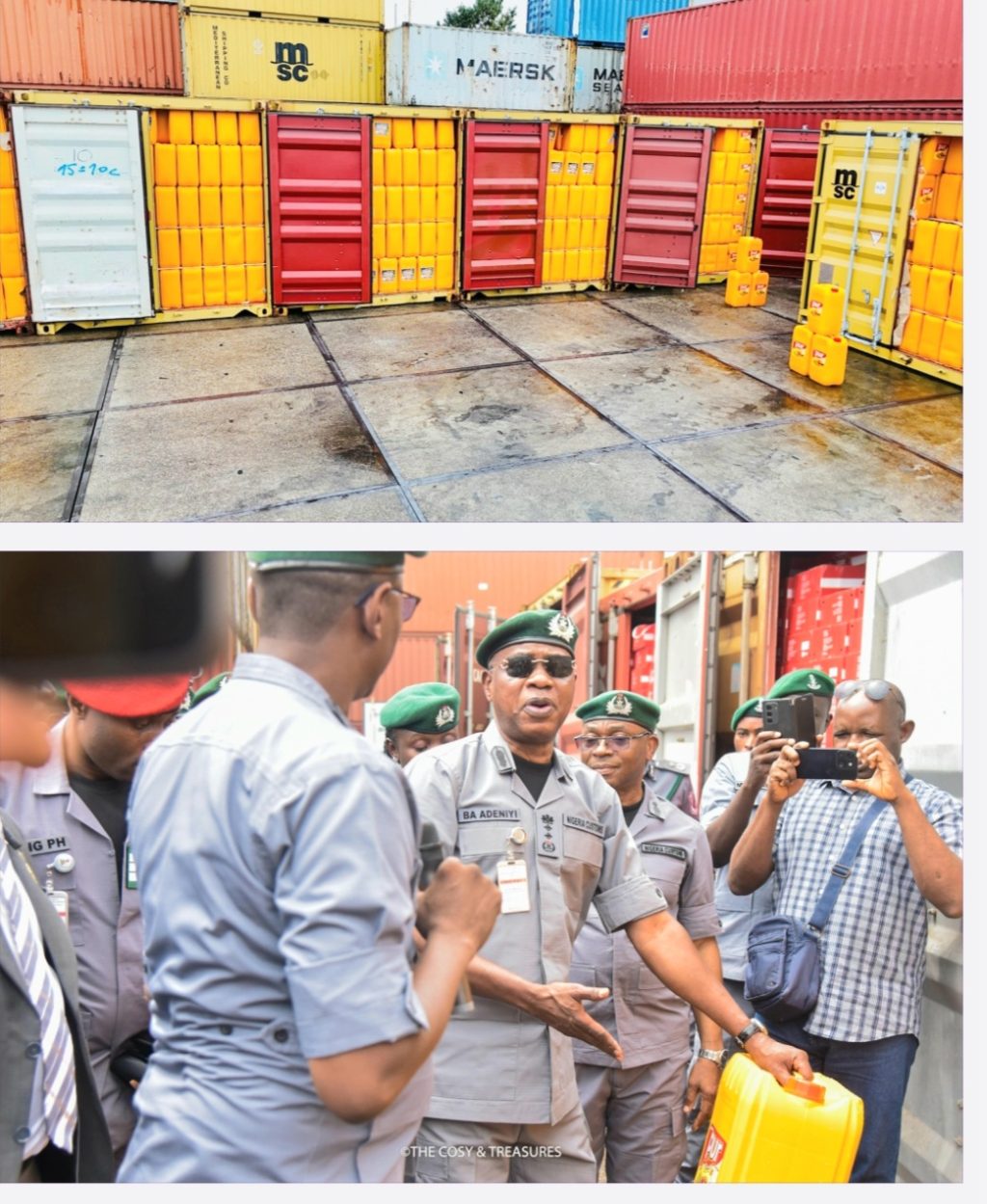
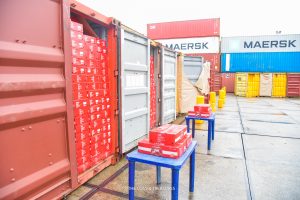
The latest interceptions therefore represent more than routine seizures, they form part of a broader economic-protection strategy aimed at safeguarding the productive capacity of the Nigerian economy. The consignments comprised 45 20-foot containers of foreign vegetable oil, nine 40-foot containers of used clothing and two 20-foot containers of Channy tomato paste, categories of imports with direct implications for Nigeria’s agriculture, manufacturing and consumer-product value chains.

The CGC stressed that the Customs enforcement mandate was not intended to impede legitimate commerce, but to create a fair, secure and predictable trading environment in which compliant businesses can compete without being disadvantaged by smugglers, fraudulent importers or operators who deliberately circumvent the nation’s trade regulations.
He consequently urged importers and other stakeholders to ascertain the admissibility of their intended consignments before commencing transactions and to ensure that declarations accurately reflect the description, quantity, value, origin and tariff classification of their goods.
Under Adeniyi’s leadership, the NCS has increasingly positioned enforcement as a critical instrument of economic governance and national development, deploying intelligence, technology, inter-agency collaboration, strategic surveillance and targeted interventions against illicit trade. The approach extends beyond interception of prohibited imports to confronting the wider ecosystem of smuggling, including concealment, false declaration, undervaluation, tariff evasion and movement of restricted commodities through Nigeria’s ports, borders and other trade corridors.
This multi-front strategy reflects a broader effort to ensure that the nation’s borders serve not merely as points of entry and exit, but as strategic economic gateways through which legitimate trade can flourish while criminal networks and economic saboteurs are systematically denied access to the Nigerian market.
Adeniyi’s emphasis on intelligence-led enforcement also signals a deliberate shift towards precision policing of the trade environment, facilitating compliant cargo while concentrating the full weight of Customs scrutiny on transactions presenting heightened risks to national revenue, public safety, local industry and economic stability.
The CGC commended the Customs Area Controller, Comptroller Aliyu Alkali, and officers of the Port Harcourt II Area Command for their vigilance and operational effectiveness. He maintained that sustained professionalism, intelligence gathering and adherence to established import procedures remain indispensable to the Service’s campaign to frustrate smuggling networks and protect legitimate commerce.
The seizures further reinforce the Federal Government’s drive to promote Made-in-Nigeria products, strengthen domestic value chains, enhance food security, stimulate industrial capacity and create sustainable employment. By intercepting imports that violate established regulations, the Service is seeking to ensure that businesses investing in Nigerian production are not compelled to compete on unequal terms against illicitly imported alternatives.
The latest operation therefore represents another significant front in NCS’s evolving anti-smuggling campaign under Adeniyi, a campaign increasingly anchored on intelligence, technology, risk management and economic protection, with the overarching objective of securing Nigeria’s borders while creating the conditions for legitimate businesses and domestic industries to thrive.